Employee Spotlight: Sara Goldsberry
Published on August 20, 2026
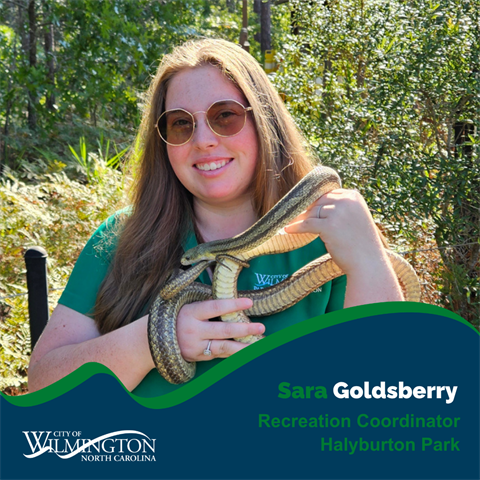
If you’ve visited Halyburton Park’s Nature and Event Center, you may have met some of its most unique residents. Sara Goldsberry, Recreation Coordinator, helps care for these animals and create opportunities for visitors to connect with Wilmington’s natural communities.
What’s your favorite part about working at Halyburton Park, and what’s something you wish more people knew about the park?
My favorite part about working at Halyburton Park is taking care of all the animals that live inside the Nature and Event Center. Here, we have a small collection of local animal species: snakes, turtles, frogs, toads, and fish. We're working on expanding our collection to include three more frog species, a couple of lizard species, and fairy shrimp. By having these animals at the park, guests can get to know some of their neighbors in nature and hopefully, feel more closely connected to Wilmington's natural communities.
I wish more folks knew about the animals at the center. Often, park guests are surprised to find residents like Misty, our yellow rat snake, as well as the other animals living in the building. Talking to park guests about the animals is such a fun part of the job, as Halyburton staff get to connect the environmental benefits of having these animals around to people's lived experiences: whether folks have watched a box turtle cross their yard or become fond of their garden, or they find treefrogs on their porch in the evenings. The center is also a welcome refuge from the summer heat and pop-up showers.
What’s one memorable moment or experience you’ve had while working at Halyburton Park?
One of my favorite experiences so far has been helping to plan our new fairy shrimp habitat and husbandry schedule. Fairy shrimp are a small, freshwater crustacean that live in vernal pools. Our local species can reach up to half an inch in size (their eggs are about 0.17 millimeters in size) and can live up to 8 weeks, so it has been exciting preparing to keep this species on display year-round and accommodating each stage of their lifecycle. These crustaceans will serve an important role in education around vernal pools, one of the natural communities found in the park.