Updates on Cape Fear Memorial Bridge Replacement Project
Published on November 20, 2026
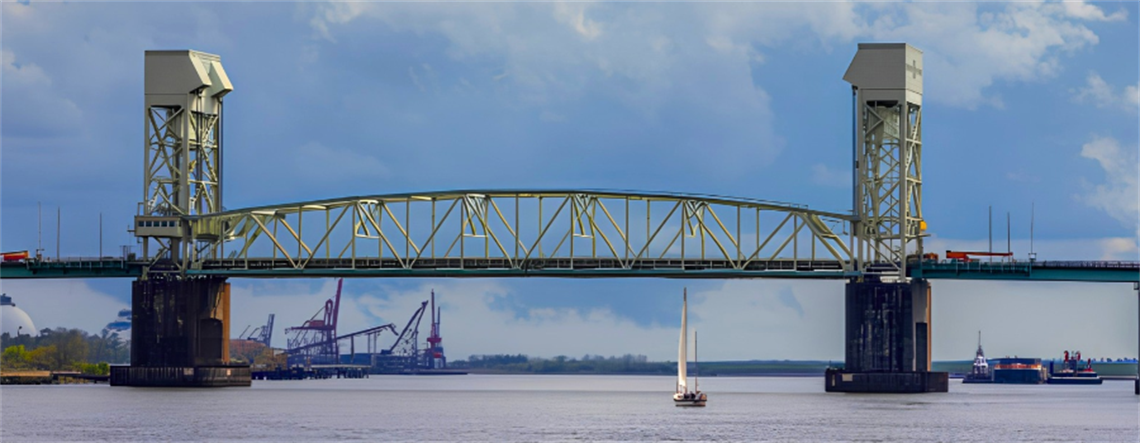
For more than 50 years, the Cape Fear Memorial Bridge has connected people, communities, and opportunities across the Cape Fear region. For thousands of residents, it is part of everyday life, from getting to work and taking children to school to accessing healthcare, supporting local businesses, and staying connected to the people and places that matter most.
As the N.C. Department of Transportation (NCDOT) plans for the bridge's future, the City of Wilmington is advocating for a solution that considers the needs of our entire region. That means looking beyond the river crossing itself to understand how decisions made today will affect the people who rely on it, the neighborhoods and businesses surrounding it, and the communities on both sides of the river for generations to come.
The Latest on the Bridge
There is new information on the Cape Fear Memorial Bridge project. Following public feedback, NCDOT unveiled a revised version of Alternative B on November 4, introducing a new approach to connecting the bridge with downtown Wilmington. The revision changes the proposed design, but questions remain about how it could affect traffic, nearby neighborhoods, and the surrounding community. With two alternatives still on the table, here's a closer look at what's being considered.
Alternative A | Movable-Span Bridge
A movable bridge with 65 feet of vertical clearance when closed and up to 135 feet when raised to accommodate taller vessels.
Rendering of Alt A (below) provided by NCDOT
Revised Alternative B | Fixed-Span Bridge
A fixed bridge with 135 feet of vertical clearance, allowing vessels to pass beneath without bridge openings. The revised design replaces the previously proposed Fifth Avenue connection with a looping approach to Third Street.
Rendering of Revised Alt B (below) provided by NCDOT
NCDOT has opened a 30-day public review period specifically for the revised Alternative B design. The City continues to review the alternatives and seek additional information to better understand their potential impacts on Wilmington and the surrounding region.
The Unanswered Questions
While the revised Alternative B addresses some concerns associated with the original proposal, important questions remain about how the project will affect Wilmington. Here's what we're keeping an eye on:
Where does the traffic go?
The bridge is a major transportation connection, but its impacts don't end at the riverbank. Changes to the bridge's design and downtown connections could affect traffic patterns throughout Wilmington, including streets and intersections beyond the immediate project area.
The revised Alternative B would change how vehicles enter downtown, yet updated traffic analysis has not been provided to demonstrate how the new configuration would operate or affect the surrounding street network. The City continues to seek a more complete understanding of those impacts before a preferred alternative is selected.
What's all that noise?
For those living and working near the Cape Fear Memorial Bridge, a new bridge could mean changes to the sounds of everyday life. The height, alignment, and location of the roadway can all influence how traffic noise travels into surrounding neighborhoods.
While Revised Alternative B changes the bridge's proposed alignment, updated noise analysis has not been provided to show how the new configuration could affect nearby homes and businesses. Understanding these potential impacts will be an important part of evaluating the revised design.
What about the water under the bridge?
The Cape Fear River and surrounding wetlands are important natural resources, and the project will involve construction within and around these sensitive areas.
Both alternatives have potential environmental impacts, particularly on Eagles Island. The City continues to seek a thorough evaluation of those impacts, including whether additional alternatives could reduce effects on wetlands and other natural resources.
What makes Wilmington, Wilmington?
Residents have already made it clear that Wilmington's character matters. In fact, preserving local character emerged as one of four major priorities in the Greater Downtown Plan, shaped by thousands of community voices.
Revised Alternative B introduces a large, looping roadway connection to Third Street that would significantly change the appearance of downtown's western edge. While the revision may reduce direct impacts to historic properties, questions remain about how a structure of this scale would fit within Wilmington's historic setting and the community's vision for downtown.
A Billion-Dollar Question
With the replacement project estimated to cost more than $1 billion, how it will be funded remains a significant consideration.
Wilmington City Council has formally opposed tolling the Cape Fear Memorial Bridge replacement, citing the additional financial burden it could place on commuters and businesses. NCDOT estimates annual commuting-related toll costs of approximately $1,000 for a typical full-time commuter using electronic tolling and approximately $1,500 per driver using bill-by-mail. The City continues to advocate for a funding approach that recognizes the bridge's importance as a regional transportation connection without placing additional costs on the people who depend on it.
Before We Cross That Bridge...
The revised Alternative B design changes how the bridge would connect with downtown Wilmington. NCDOT has provided just 30 days for public review of the revised design, without updated traffic or noise analyses to help the public fully understand its potential impacts
The City has also raised concerns about the anticipated Finding of No Significant Impact (FONSI), a federal determination that a project is not expected to have significant environmental effects requiring a more detailed Environmental Impact Statement.
The City believes the environmental review should be guided by complete technical analysis and a full understanding of the potential impacts, rather than anticipating a determination while important questions remain unanswered.
What is the City doing?
Although NCDOT is responsible for planning and delivering the project, the City of Wilmington has remained actively involved in reviewing the proposed alternatives and advocating for the community's interests.
In September, City Council adopted a resolution opposing tolling and the original 135-foot fixed-span alternative. In October, the City submitted formal comments on NCDOT's Environmental Assessment(PDF, 17MB), identifying concerns about traffic, noise, environmental impacts, and the evaluation of potential alternatives.
The revised Alternative B addresses some of the issues residents raised, particularly those related to the original Fifth Avenue connection. However, many of the City's broader concerns remain, and staff will continue reviewing new information and working with NCDOT and regional partners as the project advances.